Last month, we covered where to find landscape lighting design services in Grand Rapids and focused on how lighting improves safety, ambiance, and the way a property functions after dark. This month is the next step in the content cluster. Once lighting is part of the conversation, the broader question becomes how to plan an outdoor living space that works during the day, at night, and across Michigan’s changing seasons.
The short answer is that how to plan an outdoor living space starts with understanding how you want to use the yard. The most successful plans bring together patio layout, circulation, lighting, planting, privacy, and comfort in a way that supports real life instead of just filling space.
Quick-read summary:
- How to plan an outdoor living space starts with function first
- Good planning connects the patio, seating, lighting, and planting into one layout
- Michigan weather makes seasonal durability and usability especially important
- A thoughtful design improves comfort, flow, and long-term value
- Planning first makes phasing and budgeting easier
Start with How You Want to Use the Space
The first step in how to plan an outdoor living space is deciding what the space actually needs to do. Many homeowners know they want a patio or a better backyard, but they have not yet defined how they want the area to function.
Ask questions like:
- Will this be mostly for dining, relaxing, or entertaining?
- How many people should the space comfortably hold?
- Do you want room for a fire feature or gathering area?
- Will the space be used in the evening?
- How much privacy do you need?
- Should the layout support kids, pets, or frequent guests?
The clearer your goals are, the easier it becomes to shape a layout that works.
Plan the Patio as the Anchor of the Outdoor Living Space
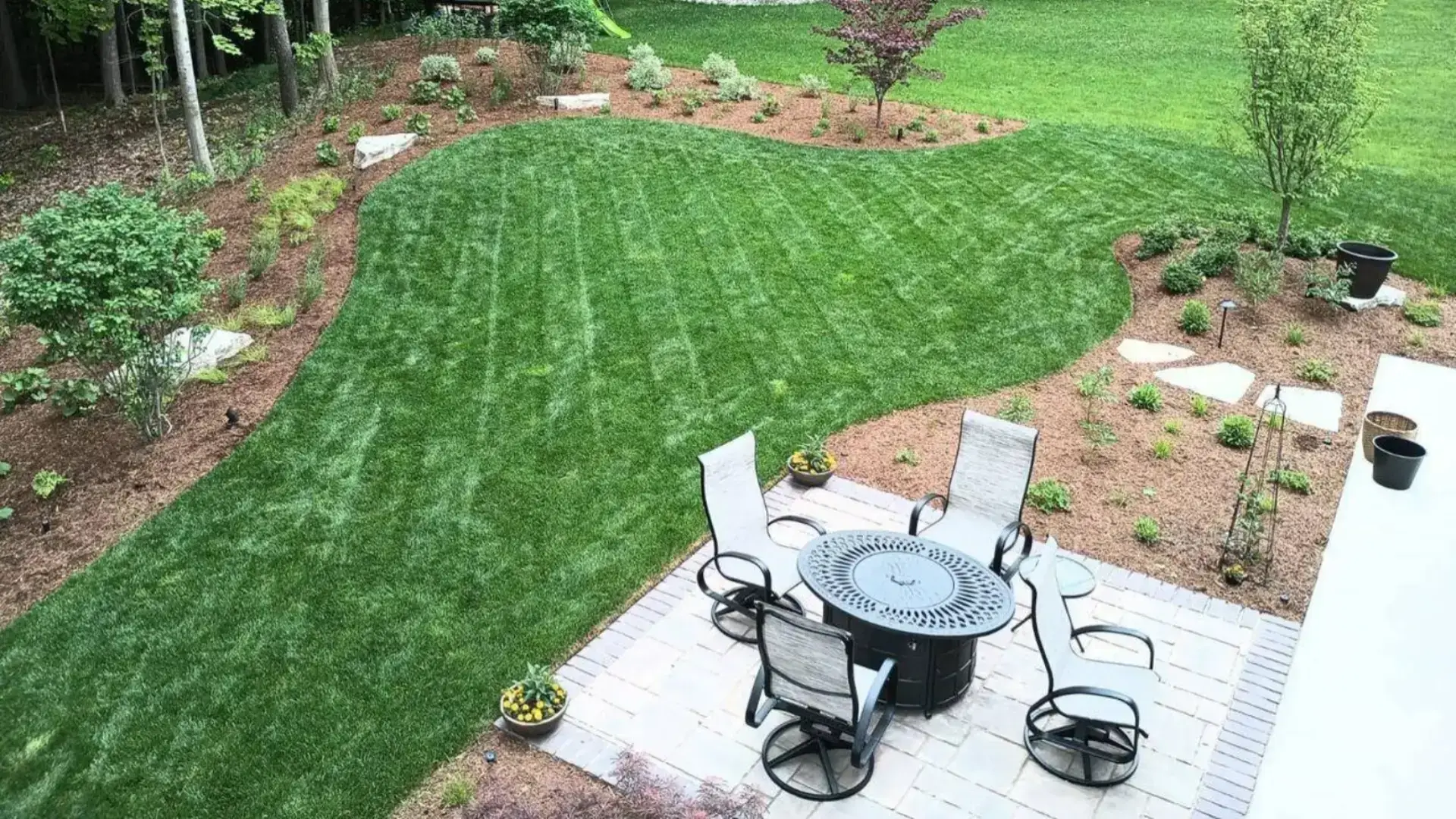
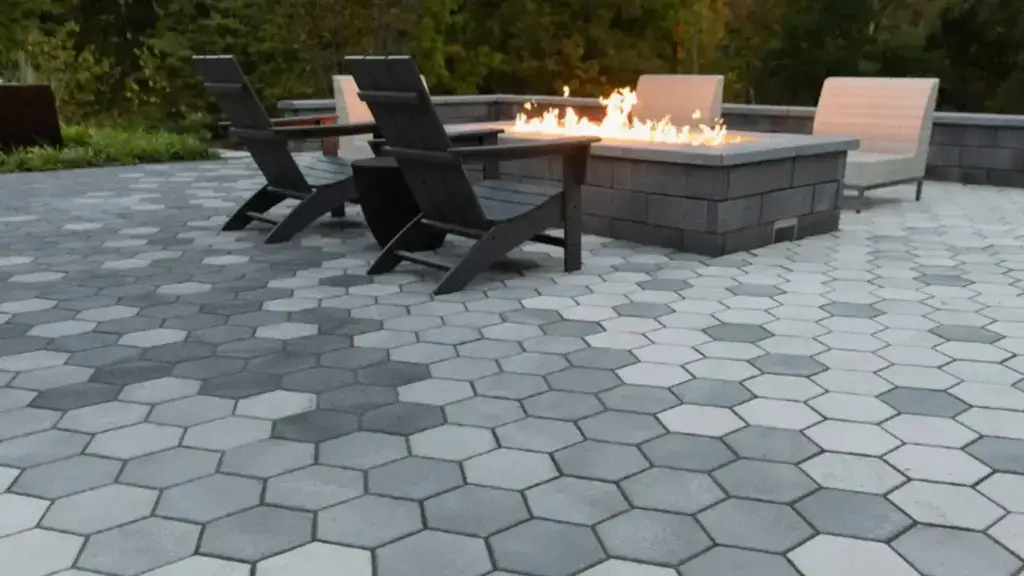
One of the biggest parts of how to plan an outdoor living space is determining where the patio should go and how large it needs to be. The patio often acts as the foundation for the whole design.
A well-planned patio should consider:
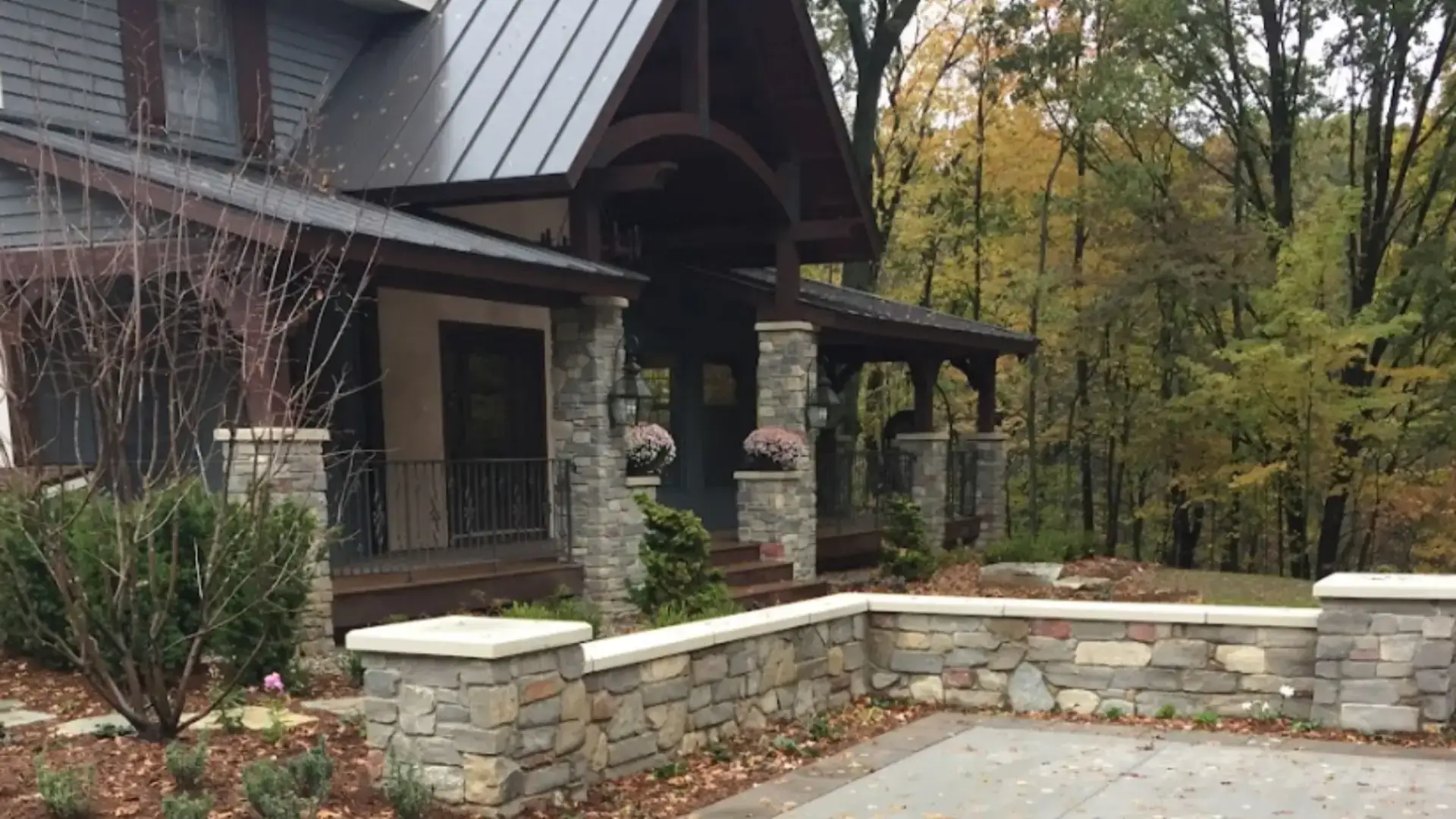
- how it connects to the home
- how people will move to and from the yard
- where furniture will actually fit
- sun and shade conditions
- views from the house and from the patio itself
- how planting or privacy can frame the area
A patio that is too small, poorly placed, or disconnected from the rest of the yard can limit how useful the entire outdoor space feels.
Think in Zones, Not Just Features
A common mistake homeowners make when learning how to plan an outdoor living space is focusing on individual features instead of how the whole space works together.
Instead of thinking only about a patio, a fire feature, or lighting, think in zones such as:
- dining
- lounging
- circulation
- play or open lawn
- privacy buffers
- transitions from the house
This approach makes the space feel more intentional. It also helps prevent overcrowding or awkward gaps between features.
Use Planting to Shape Comfort and Privacy
Planting is not just decoration. In how to plan an outdoor living space, planting often plays an important role in defining the space and making it feel more complete.
Planting can help:
- soften hardscape edges
- create a sense of enclosure
- improve privacy
- provide seasonal interest
- guide movement through the yard
- make the patio feel more integrated with the landscape
In Michigan, plant selection should also consider hardiness, maintenance expectations, and how the landscape will look across more than one season.
Include Lighting Early, Not as an Afterthought
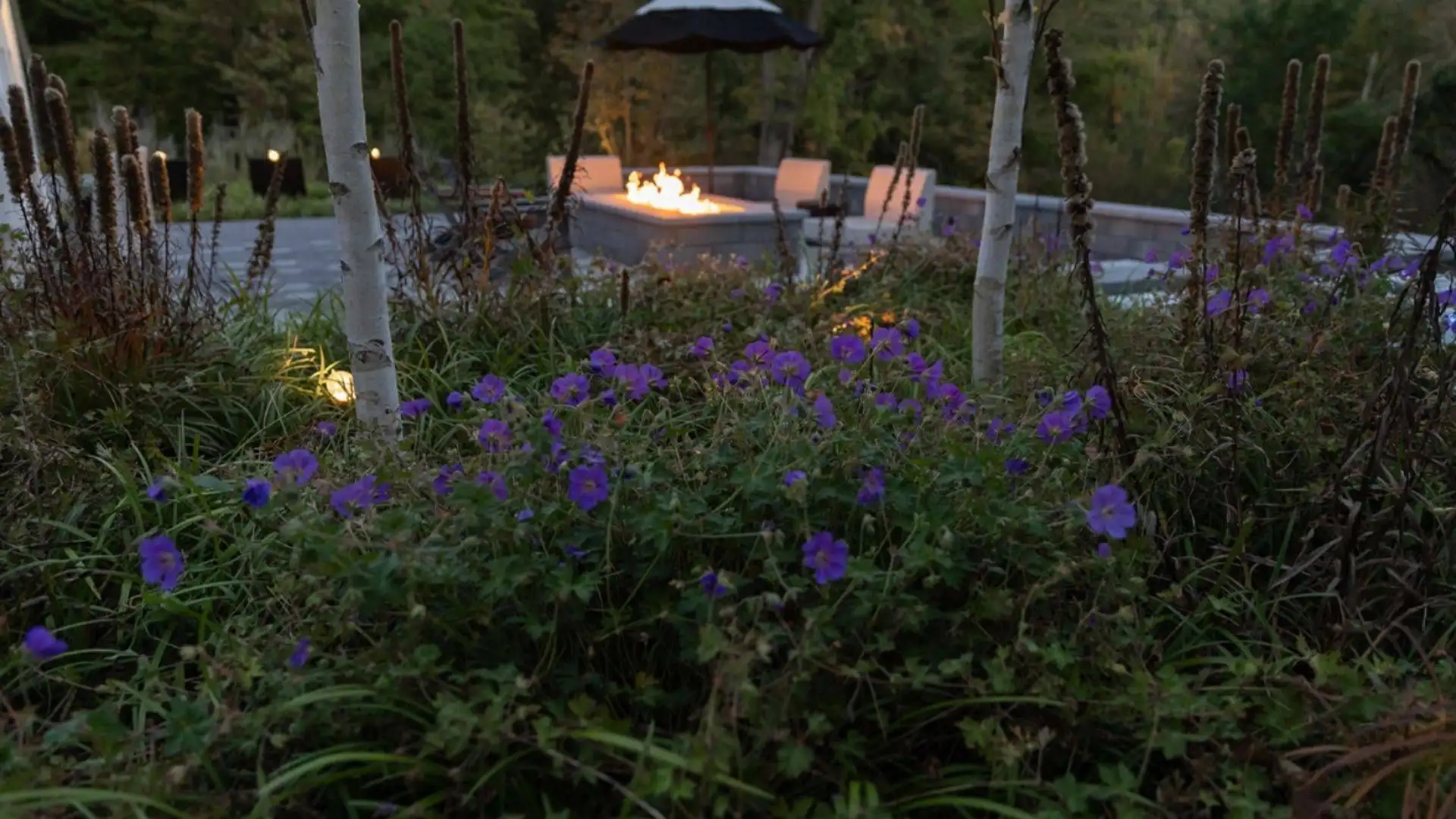
Because outdoor spaces are often used in the evening, lighting should be part of how to plan an outdoor living space from the beginning. It supports both function and atmosphere.
Good lighting planning may include:
- path and transition lighting
- ambient lighting around seating
- accent lighting for planting or trees
- entry and connection lighting
- visibility around steps or grade changes
If lighting is added too late, the space can feel incomplete or less cohesive. That is why it often works best as part of a broader design strategy.
Comparison: Basic Patio Setup vs. Designed Outdoor Living Space
This is one of the clearest ways to understand how to plan an outdoor living space.
Basic patio setup
This might include a simple patio and furniture without much broader planning.
Possible drawbacks:
- weak connection to the house
- limited circulation
- poor privacy
- little structure around the patio
- no lighting or planting strategy
- less comfortable long-term use
Designed outdoor living space
This includes a coordinated plan for layout, comfort, movement, lighting, planting, and how the space functions over time.
Benefits:
- better flow
- stronger usability
- improved comfort
- more cohesive appearance
- easier phasing
- more value from the investment
For homeowners making a meaningful investment in the backyard, a designed space usually performs much better than a basic setup.
Plan for Michigan Conditions
A major part of how to plan an outdoor living space in this region is local context. Michigan weather, seasonal use, and freeze-thaw conditions affect both design choices and material planning.
That means a strong outdoor living plan should consider:
- drainage and runoff
- patio material durability
- spring, summer, and fall use
- winter visibility and maintenance
- sun exposure during the warm months
- how the space transitions through the seasons
In other words, a beautiful design still has to function well in real conditions.
When to Take Action
It may be time to move forward if:
- you want a backyard that is more usable
- you are planning a patio or seating area
- you want to entertain outside more often
- you need more privacy or structure in the yard
- you want lighting and planting to support the space
- you want to avoid a layout that feels disconnected
If that sounds familiar, the next step is to move from general planning into a service page like Patio and Outdoor Living Design Grand Rapids so you can apply the ideas to your own property.
Final Takeaway
Understanding how to plan an outdoor living space is really about creating a yard that works for how you want to live. The best spaces are not built around one feature alone. They combine patio layout, planting, lighting, privacy, and movement into one clear design.
For Michigan homeowners, that planning becomes even more important because the space has to work across changing seasons and real-world conditions. If you want an outdoor area that feels comfortable, connected, and built to last, starting with a thoughtful outdoor living plan is the smartest move.